


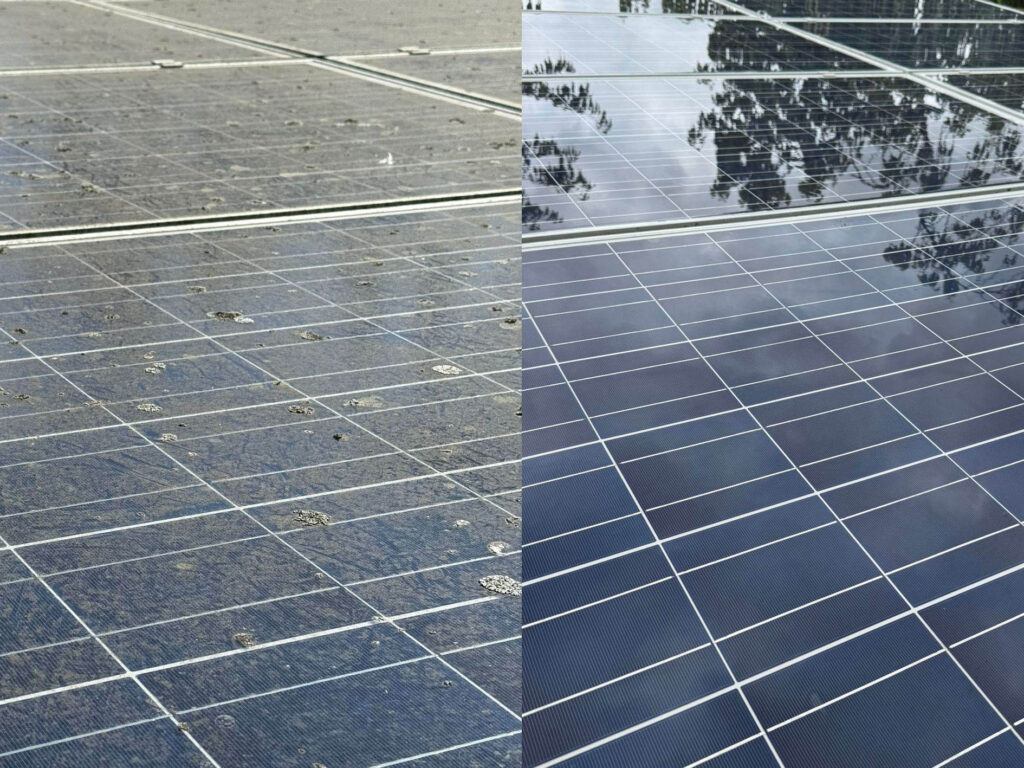
Solar delivers steady savings and improves asset value, but only if panels actually produce energy. Dust, bird droppings, pollen and urban grime all chip away at output in ways that are easy to miss. The good news is the fixes are straightforward, measurable and often pay for themselves quickly. This guide shows what matters and how to act, with real examples from York, Manchester, Birmingham and the Southwest.

Why cleanliness and maintenance matter
A dirty panel is a losing asset. Field studies and commercial reports regularly show heavy soiling can cut production by around 30 percent. For a commercial array that adds up to thousands of pounds in lost energy every year. Timely cleaning and simple prevention restore real output and make the financial case for solar far stronger.
What really affects on roof performance
Several site specific factors decide how closely actual production matches nameplate capacity.
Location in the UK
York: A largely rural catchment with variable weather. Less intense sunlight than the south but steady yields. Dust from nearby fields and seasonal pollen are common issues. Clean after harvest or major pollen events.
Manchester: Cloudier and more urban. Traffic and industrial particulates leave a thin film that scatters light. In town centre locations soot and grime are often the primary yield killers. Prioritise monitoring and more frequent inspections.
Birmingham: Urban and centrally located with considerable traffic. Expect soot and general urban grime. If your roof sits near busy roads, plan for quarterly inspections and spot cleans.
Southwest: More sun hours and coastal exposure. Good baseline yield, but salt spray on coastal roofs and bird activity in rural coastal sites can increase soiling. Timing cleans for after dry spells gives the best return.
Pollution and contaminants
Soot and particulate matter from roads and industry form films that reduce how much light reaches cells. Bird droppings, tree sap and pollen create localised blockages that cause hot spots and can stain glass if left too long. Algae and mould show up in humid and shaded spots and cut output significantly.
Practical playbook: what to do, and when
Here are tested steps that move the needle, with regional nudges.
Monitor first, act second
Use inverter or monitoring platform data to spot sustained drops. A decline of five percent or more over several days is a good trigger to inspect. For commercial systems weekly or daily automated checks are ideal.Inspect quarterly, clean as needed
As a baseline inspect every three months. Increase frequency if you are near busy roads, on the coast, under trees or close to construction. In Manchester and Birmingham you may need quarterly or even monthly visual checks in high traffic zones. In the Southwest and rural York, a single annual clean plus a midyear spot check often does the job unless bird or pollen activity spikes.Use professional teams for large arrays
Commercial arrays need trained operators who use correct water quality and low abrasion techniques. Professionals also spot mechanical or electrical issues during visits, which adds value beyond cleaning.Prioritise worst offenders
Bird droppings, sticky sap and pollen cause localised losses that usually give the largest immediate return on spot cleaning. Tackle those before scheduling a full array clean and you will often see quick gains.Reduce causes not just symptoms
Bird proofing, pruning trees and clearing nearby gutters reduce how fast panels foul. Small investments here cut the number of cleanings you need.Be cautious with coatings and treatments
Anti soiling coatings can help in some locations but check lifespan and warranty effects. Often tilt, design and routine cleaning win over time.Keep records and do the math
Log generation before and after cleaning for at least 30 days. Numbers are the best way to judge whether a cleaning provider delivers value and to set the right cadence.
Regional quick notes
York: Expect pollen and dust. Clean after harvest and after long dry spells. Monitor during spring pollen season.
Manchester: Expect urban grime. Monitor continuously and plan for more frequent cleans in central locations.
Birmingham: Traffic soot is a common issue. Quarterly inspections are a good starting point.
Southwest: More sun, better baseline yields, but watch salt spray near the coast and bird activity inland. Time cleans after dry spells for maximal immediate gain.
Your next steps
Treat solar like plant and equipment rather than a passive asset. Start with monitoring, inspect quarterly, and use targeted cleaning for problem areas. Add simple prevention like bird proofing and tree management and keep records so you can prove value. Adjust frequency to your local situation, what works in York will differ from Manchester or the Southwest.
